

Carrito de compra
Su pedido cuenta con 0 productos
Envío gratis a partir de $389.00 (Consulta T&C)
| ISBN: | 9789401144070 |
|---|---|
| Formato: | Page Fidelity |
| Idioma: | Inglés |
| Editorial: | Springer Nature |
| Tema: | Negocios y economía |
| Subtema: | Desarrollo desarrollo económico |
| Año de publicación: | 2012-12-06 |
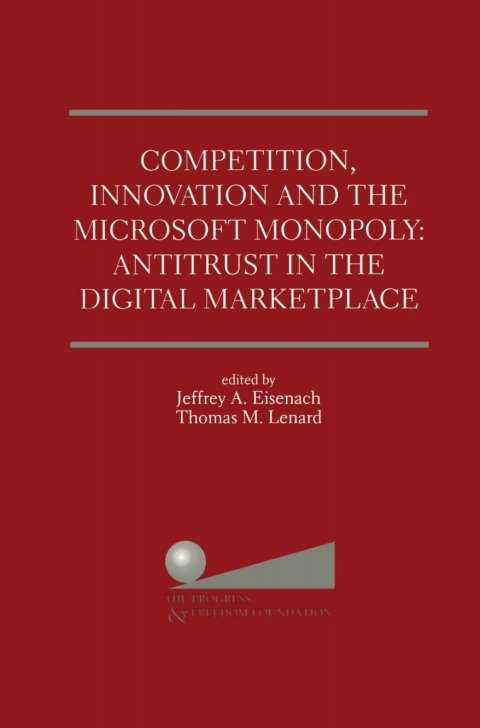
Do the antitrust laws have a place in the digital economy or are they obsolete? That is the question raised by the governments legal action against Microsoft, and it is the question this volume is designed to answer. Americas antitrust laws were born out of the Industrial Revolution. Opponents of the antitrust laws argue that whatever merit the antitrust laws may have had in the past they have no place in a digital economy. Rapid innovation makes the accumulation of market power practically impossible. Markets change too quickly for antitrust actions to keep up. And antitrust remedies are inevitably regulatory and hence threaten to `regulate business. A different view - and, generally, the view presented in this volume - is that antitrust law can and does have an important and constructive role to play in the digital economy. The software business is new, it is complex, and it is rapidly moving. Analysis of market definition, contestibility and potential competition, the role of innovation, network externalities, cost structures and marketing channels present challenges for academics, policymakers and judges alike. Evaluating consumer harm is problematic. Distinguishing between illegal conduct and brutal - but legitimate - competition is often difficult. Is antitrust analysis up to the challenge? This volume suggests that antitrust analysis `still works. In stark contrast to the political rhetoric that has surrounded much of the debate over the Microsoft case, the articles presented here suggest neither that Microsoft is inherently bad, nor that it deserves a de facto exemption from the antitrust laws. Instead, they offer insights - for policymakers, courts, practitioners, professors and students of antitrust policy everywhere - on how antitrust analysis can be applied to the business of making and marketing computer software.









 Este sitio web utiliza cookies para mejorar la experiencia del usuario y asegurar su funcionamiento con eficacia.
Al utilizarlo usted acepta el uso de cookies.
Este sitio web utiliza cookies para mejorar la experiencia del usuario y asegurar su funcionamiento con eficacia.
Al utilizarlo usted acepta el uso de cookies.