
Carrito de compra
Su pedido cuenta con 0 productos
Envío gratis a partir de $389.00 (Consulta T&C)
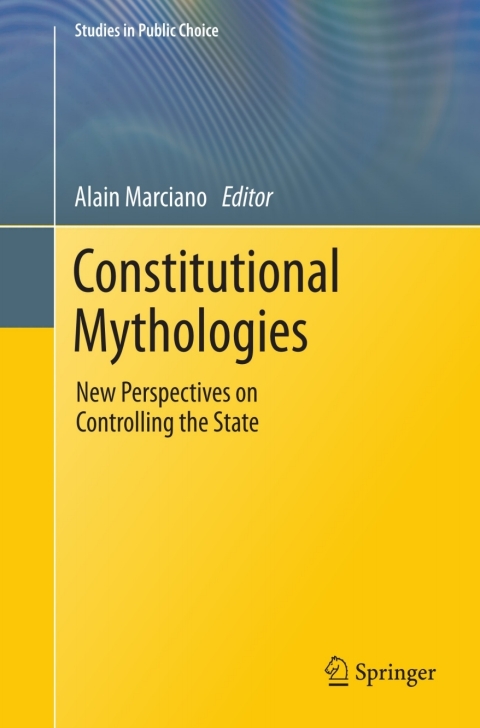
| ISBN: | 9781441967848 |
|---|---|
| Formato: | Page Fidelity |
| Idioma: | Inglés |
| Editorial: | Springer Nature |
| Tema: | Ciencias políticas |
| Subtema: | Ciencias políticas |
| Año de publicación: | 2011-08-02 |
Our societies obviously rest on common beliefs. These "myths" are tools that help us to develop and build common identities; they form the structure around which societies function. This does not imply that these beliefs are “true,� in the sense that they would be supported by empirical facts. In social matters, myths have undoubtedly important functions to play even if no empirical facts support them. On the other hand, and precisely because they are not discussed, myths may be problematic: they may create illusions, conserve structures that are inefficient and unable to improve the situation of citizens. This is particularly true with constitutions. Constitutions are very important for societies: a constitution is a document — even in societies based on “unwritten� constitutions — which binds citizens together, creating unity among them, and which forms the framework within which our activities take place. As Nobel Prize laureate James Buchanan used to say: constitutions contain the rules of the social game we play in our everyday life. However, constitutions are not frequently debated by citizens. This is why we end up with common beliefs about these constitutions: they are above our heads, around us. We take them, their role, function, and nature as given. The purpose of this volume to investigate and challenge common constitutional myths. Featuring contributions from prominent economists, political scientists, and legal scholars, the chapters in this volume address such myths as “constitutions are binding social contracts,� “constitutions are economic documents� and “constitutions are legal documents.� Illustrating their analyses with historical and contemporary examples from the United States, Canada, and Europe, the authors build a multi-layered approach to understanding constitutions and their implications for social and political influence.









 Este sitio web utiliza cookies para mejorar la experiencia del usuario y asegurar su funcionamiento con eficacia.
Al utilizarlo usted acepta el uso de cookies.
Este sitio web utiliza cookies para mejorar la experiencia del usuario y asegurar su funcionamiento con eficacia.
Al utilizarlo usted acepta el uso de cookies.