
Carrito de compra
Su pedido cuenta con 0 productos
Envío gratis a partir de $389.00 (Consulta T&C)
| ISBN: | 9783540457336 |
|---|---|
| Formato: | Page Fidelity |
| Idioma: | Inglés |
| Editorial: | Springer Nature |
| Tema: | Ciencia |
| Subtema: | Química analítica |
| Año de publicación: | 2003-07-01 |
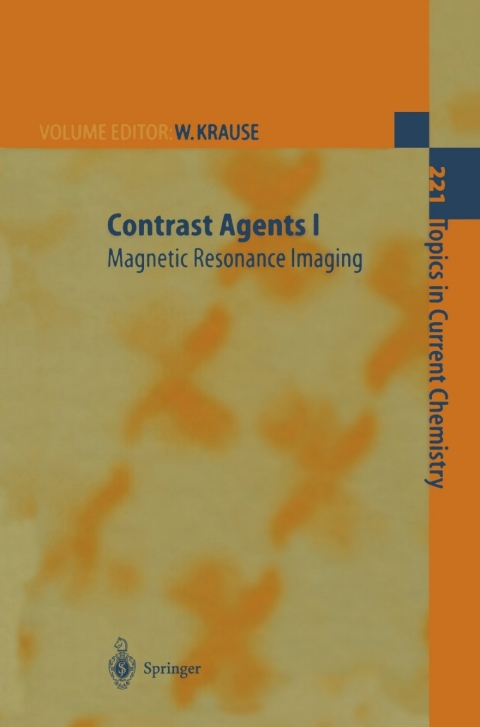
Extracellular MRI and X-ray contrast agents are characterized by their phar- cokinetic behaviour.After intravascular injection their plasma-level time curve is characeterized by two phases. The agents are rapidly distributed between plasma and interstitial spaces followed by renal elimination with a terminal half-live of approximatly 1–2 hours. They are excreted via the kidneys in unchanged form by glomerular filtration. Extracellular water-soluble contrast agents to be applied for X-ray imaging were introduced into clinical practice in 1923. Since that time they have proved to be most valuable tools in diagnostics.They contain iodine as the element of choice with a sufficiently high atomic weight difference to organic tissue. As positive contrast agents their attenuation of radiation is higher compared with the attenuation of the surrounding tissue. By this contrast enhancement X-ray diagnostics could be improved dramatically. In 2,4,6-triiodobenzoic acid derivatives iodine is firmly bound. Nowadays diamides of the 2,4,6-triiodo-5-acylamino-isophthalic acid like iopromide (Ultravist, Fig. 1) are used as non-ionic (neutral) X-ray contrast agents in most cases [1].





 Este sitio web utiliza cookies para mejorar la experiencia del usuario y asegurar su funcionamiento con eficacia.
Al utilizarlo usted acepta el uso de cookies.
Este sitio web utiliza cookies para mejorar la experiencia del usuario y asegurar su funcionamiento con eficacia.
Al utilizarlo usted acepta el uso de cookies.