

Carrito de compra
Su pedido cuenta con 0 productos
Envío gratis a partir de $389.00 (Consulta T&C)
| ISBN: | 9789811680557 |
|---|---|
| Formato: | ePub |
| Idioma: | Inglés |
| Editorial: | Springer Nature |
| Tema: | Historia |
| Subtema: | Asia china |
| Año de publicación: | 2022-01-17 |
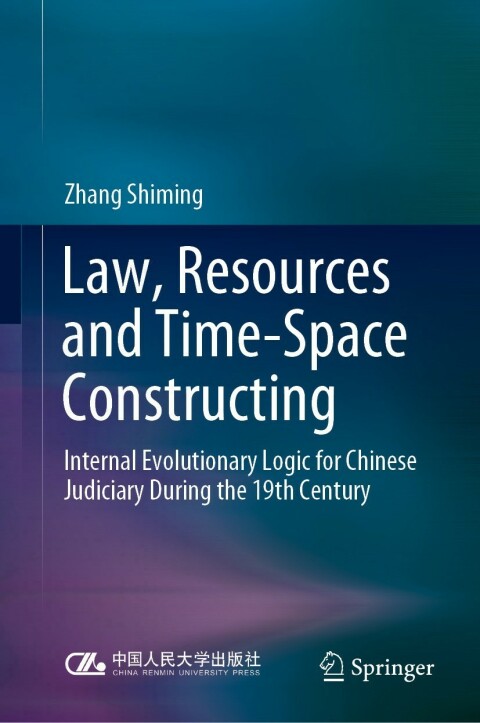
This book studies the judicial evolution of the Qing Dynasty. It sums up the changes from six major aspects: 1. Banfang(ç?房)emerged in the late Qianlong period; 2. The opening of capital appeals(京控)early in Jiaqing reign; 3. The consular jurisdiction was established during Daoguang reign; 4. The execution on the spot (就地æ£æ³•ï¼‰was started in Daoguang and Xianfeng periods; 5. The introduction of fashenju (å?‘审局,a interrogatory court) happened during Tongzhi reign; 6. Late in Guangxu reign, banishment was abolished, and reforms were made for prisons. In the past, people did not have a comprehensive understanding of these big changes. From the perspective of legal culture, scholars often criticize traditional Chinese law focuses on criminal law while ignores civil law in terms of legal culture, but this situation can be explained in part by the inadequate allocation of resources and authoritarian resources in traditional societies. Using a large number of archives and precious materials such as private notes that were not noticed by academics in the past, this book adopts the research path of new historical jurisprudence to explore the inner logic of judicial evolution in the Qing Dynasty, focusing on the triangular connection between legal rules, resources, and temporal and spatial constructions, which is an important contribution to the study of traditional Chinese law.










 Este sitio web utiliza cookies para mejorar la experiencia del usuario y asegurar su funcionamiento con eficacia.
Al utilizarlo usted acepta el uso de cookies.
Este sitio web utiliza cookies para mejorar la experiencia del usuario y asegurar su funcionamiento con eficacia.
Al utilizarlo usted acepta el uso de cookies.