

Carrito de compra
Su pedido cuenta con 0 productos
Envío gratis a partir de $389.00 (Consulta T&C)
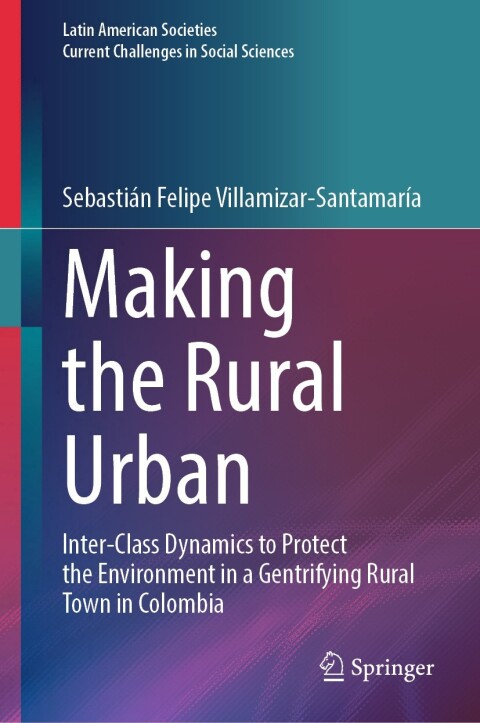
| ISBN: | 9783031583353 |
|---|---|
| Formato: | ePub |
| Idioma: | Inglés |
| Editorial: | Springer Nature |
| Tema: | Ciencia |
| Subtema: | Ciencias Ambientales |
| Año de publicación: | 2024-05-08 |
This book takes the small rural town of La Calera, in the outskirts of the Colombian capital of Bogotá, as a case study to analyze how residents from different social classes ? wealthier ex-urban newcomers arriving to traditionally peasant and rural areas ? interact to decide how nature will be used in the face of further urban expansion. Contrary to the conflicts in other gentrification cases, including those of ?green? gentrification, this book shows how newcomers and longtimers in La Calera use environmental concerns to bridge social class rifts and push the state to provide water, public space, and decision-making power. Residents see abundant ecological resources like water and land around them, but they do not have access to aqueducts, green public space or power over planning decisions affecting the distribution of these resources. As a response, and to challenge the state more effectively, newcomers and longtimers create inter-class alliances through what the author calls third nature: the way residents try to both protect and keep using existing ecological goods. To do so, despite high levels of class inequality, residents had a similar goal of protecting ecological resources around them by intervening in the physical and political landscapes against a state that induces scarcity, selectively enforcing environmental policies to the detriment of Calerunos. As cities all around the Global South continue to grow, urban expansion posits a threat to the environment by transforming agricultural and protected areas into denser residential or touristic spaces. Moreover, as natural resources become scarcer in the face of climate change, inequality might further existing environmental privileges and vulnerabilities. By examining closely how Calerunos bridge class inequalities for environmental reasons, this case highlights processes that inform other gentrifying rural spaces around the world.





 Este sitio web utiliza cookies para mejorar la experiencia del usuario y asegurar su funcionamiento con eficacia.
Al utilizarlo usted acepta el uso de cookies.
Este sitio web utiliza cookies para mejorar la experiencia del usuario y asegurar su funcionamiento con eficacia.
Al utilizarlo usted acepta el uso de cookies.