

Carrito de compra
Su pedido cuenta con 0 productos
Envío gratis a partir de $389.00 (Consulta T&C)
| ISBN: | 9781394293575 |
|---|---|
| Formato: | ePub |
| Idioma: | Inglés |
| Editorial: | Wiley Global Research (STMS) |
| Tema: | Ciencias sociales |
| Subtema: | Estudios sobre los Medios |
| Año de publicación: | 2026-05-01 |
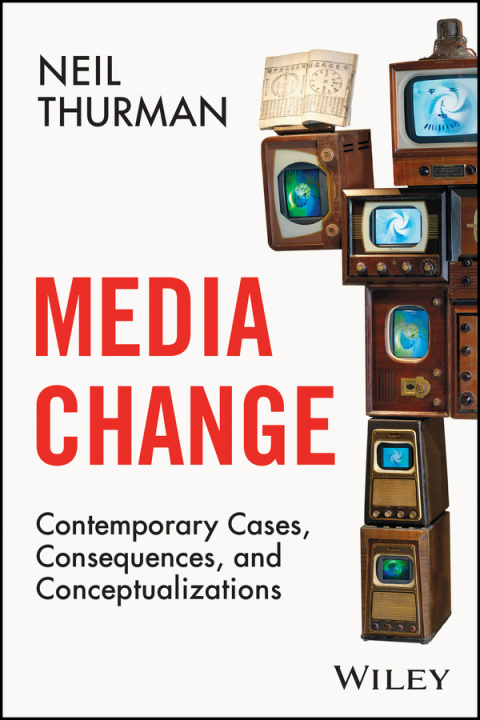
Explores the multifaceted dynamics of media change across technologies and societies Media change is constant, but it is rarely straightforward. While some shifts in the media landscape are rapid and transformative, others unfold slowly, unevenly, or even stall and reverse. Media Change: Contemporary Cases, Consequences, and Conceptualizations examines this complexity through a series of contemporary, self-contained case studies. Each of the nine core chapters explores a specific example of media transformation, such as AI-driven content production, evolving regulatory landscapes, and media business models. Situating media change within broader historical and conceptual frameworks, Neil Thurman reveals how today’s most pressing issues in media are part of longer trajectories of change, shaped by forces such as technological innovation, economic pressures, and cultural resistance. Drawing on an original “6 Rs” framework--revolution, remediation, resistance, rapidity, regulation, and reversals--Thurman provides a systematic yet accessible way of thinking about how and why media change occurs. By combining rich empirical evidence with a long historical view, the book illuminates the social, industrial, and technological drivers of transformation and their impact on media practices, products, and audiences. Its nine case studies not only offer depth on contemporary issues, but also prompt reflection on broader patterns of continuity and disruption in media systems. Offering fresh insights into contemporary communication, Media Change: Balances global perspectives, drawing on both US and non-US examples Challenges common assumptions about the evolving media environment Demonstrates how change can be incomplete, uneven, and historically contingent Includes discussion questions at the end of each chapter to stimulate critical reflection Combines conceptual innovation with extensive empirical evidence Written in a clear and accessible style, Media Change: Contemporary Cases, Consequences, and Conceptualizations is an essential resource for those seeking to understand how media systems are transforming. Whether used in its entirety or as stand-alone chapters, it is ideal for undergraduate, master’s, and doctoral students in media, communication, journalism, and cultural studies programs. This broad-ranging book by a true leader in the field illuminates key dynamics in media transformation in recent years: drawing on a set of well-chosen case studies, it identifies the major social, industrial, and technological drivers of change, and explains them through its innovative six Rs framework. Using that framework, Thurman prompts us to ask all the right questions--not just about his illustrative cases, but about media change more generally too. A true tour de force at this critical moment for media production, policy, and use around the world.-- Axel Bruns, Australian Laureate Fellow and Professor, Digital Media Research Centre, Queensland University of Technology Australia Drawing on nine original case studies, Thurman develops an innovative framework for understanding media change. The book brilliantly captures media changes complex historical dependencies, sometimes slow unfolding, regular reversals, and how it can--and at times should--be resisted. -- Thorsten Quandt, Professor and Dean of the Faculty of Education and Social Sciences, University of Münster, GermanyAt a time when the evolution and operation of our increasingly complex media ecosystem is of growing political, economic, and cultural consequence, Neil Thurmans book provides valuable guidance through the process of media change for students, scholars, and professionals. -- Philip M. Napoli, James R. Shepley Professor of Public Policy; Director, DeWitt Wallace Center for Media & Democracy, Duke University, USAMedia Change is a refreshing take on contemporary transformations in our media environment. Thurmans six Rs framework of media change (Revolution, Remediation, Resistance, Rapidity, Regulation, and Reversals) is definitely here to stay.-- Thomas Hanitzsch, Professor of Communication, Department of Media and Communication, LMU Munich, Germany and President, International Communication AssociationMedia Change grapples with the enormous changes that have affected media ecosystems in the past five decades and adeptly reveals why they are important and how readers should understand them. Professor Thurman explains how and why the changes have upended industries and companies and left policymakers scrambling to address new and complex media effects and issues. Although based in how the media ecosystems have evolved, the book presents insights on the contemporary relevance of those changes, and










 Este sitio web utiliza cookies para mejorar la experiencia del usuario y asegurar su funcionamiento con eficacia.
Al utilizarlo usted acepta el uso de cookies.
Este sitio web utiliza cookies para mejorar la experiencia del usuario y asegurar su funcionamiento con eficacia.
Al utilizarlo usted acepta el uso de cookies.