

Carrito de compra
Su pedido cuenta con 0 productos
Envío gratis a partir de $389.00 (Consulta T&C)
| ISBN: | 9789400751958 |
|---|---|
| Formato: | Page Fidelity |
| Idioma: | Inglés |
| Editorial: | Springer Nature |
| Tema: | Psicología |
| Subtema: | Psicología Aplicada |
| Año de publicación: | 2012-11-08 |
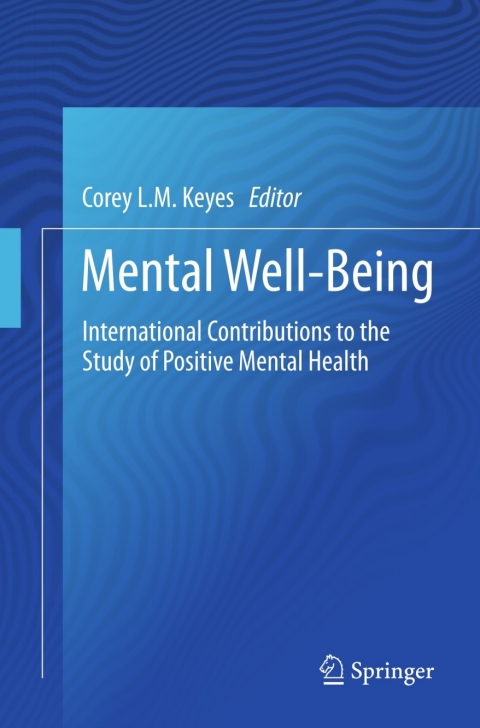
There is a new generation of research in which scholars are investigating mental health and human development as not merely the absence of illness or dysfunction, but also the presence of subjective well-being. Subjective well-being is a fundamental facet of the quality of life. The quality of an individual life can be assessed externally and objectively or internally and subjectively. From an objective standpoint, other people measure and judge another life according to criteria such as wealth or income, educational attainment, occupational prestige, and health status or longevity. Nations, communities, or individuals who are wealthier, have more education, and live longer are considered to have higher quality of life or personal well-being. The subjective standpoint emerged during the 1950s as an important alternative to the objective approach to measuring individual well-being. Subjectively, individuals evaluate their own lives as evaluations made, in theory, after reviewing, summing, and weighing the substance of their lives in social context. In short, subjective well-being is an evaluation or declaration that individuals make about the quality of their lives. Research has clearly shown that measures of subjective well-being, which are conceptualized as indicators of mental health (or ‘mental well-being’), are factorially distinct from but correlated with measures of symptoms of common mental disorders such as depression. Despite countless proclamations that health is not merely the absence of illness, there had been little or no empirical research to verify this assumption. Research now supports the hypothesis that health is not merely the absence of illness, it is also the presence of higher levels of subjective well-being. In turn, there is growing recognition of the personal and social utility of subjective well-being, both higher levels of hedonic and eudaimonic wellbeing. Increased subjective well-being has been linked with higher personal and social ‘goods’: higher business profits, more worker productivity, greater employee retention; increased protection against mortality; increased protection against the onset and increase of physical disability with aging; improved cognitive and immune system functioning; and increased levels of social capital such as civic responsibility, generativity, community involvement and volunteering. This edited volume will bring together for the first time the growing scientific literature on positive mental health that is now being conducted in many countries other than the USA. This will provide students and scholars with an invaluable source for teaching and for generating new ideas for furthering this important line of research.











 Este sitio web utiliza cookies para mejorar la experiencia del usuario y asegurar su funcionamiento con eficacia.
Al utilizarlo usted acepta el uso de cookies.
Este sitio web utiliza cookies para mejorar la experiencia del usuario y asegurar su funcionamiento con eficacia.
Al utilizarlo usted acepta el uso de cookies.