

Carrito de compra
Su pedido cuenta con 0 productos
Envío gratis a partir de $389.00 (Consulta T&C)
| ISBN: | 9783030599324 |
|---|---|
| Formato: | ePub |
| Idioma: | Inglés |
| Editorial: | Springer Nature |
| Tema: | Filosofía |
| Subtema: | Movimientos fenomenología |
| Año de publicación: | 2020-11-21 |
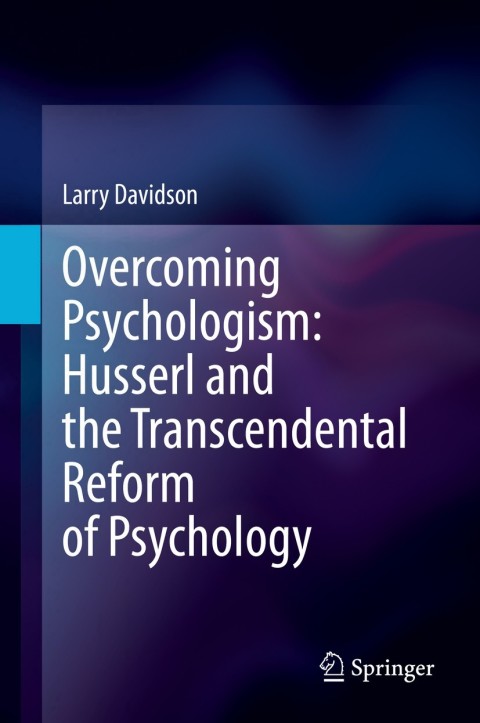
This book shows us how rather than abandoning psychology once he liberated phenomenology from the psychologism of the philosophy of arithmetic, Edmund Husserl remained concerned with the ways in which phenomenology held important implications for a radical reform of psychology throughout his intellectual career. The author fleshes out what such a radical reform actually entails, and proposes that it can only be accomplished by following the trail of the transcendental reduction described in Husserl later works. In order to appreciate the need for the transcendental even for psychology, the book tracks Husserl thinking on the nature of this relationship between phenomenology as a philosophy and psychology as a positive science as it evolved over time. The text covers Husserl definition of phenomenology as “descriptive psychologyâ€? in the Logical Investigations, rejecting the hybrid form of “phenomenological psychologyâ€? described in the lectures by that name, and endswith his proposal for a “fundamental refashioningâ€? of psychology by situating it within the transcendental framework of The Crisis of European Sciences and Transcendental Phenomenology. The Author argues for a re-grounding of psychology by virtue of a “return to positivityâ€? after having performed the reduction to transcendental intersubjectivity. What results is a phenomenological approach to a transcendentally-grounded psychology which, while having returned to the life-world, no longer remains transcendentally naïve. A phenomenologically-grounded psychology thus empowers researchers, clinicians, and clients alike to engage in social actions that move the world closer to achieving social justice for all. This text appeals to students and researchers working in phenomenology and psychology.Â











 Este sitio web utiliza cookies para mejorar la experiencia del usuario y asegurar su funcionamiento con eficacia.
Al utilizarlo usted acepta el uso de cookies.
Este sitio web utiliza cookies para mejorar la experiencia del usuario y asegurar su funcionamiento con eficacia.
Al utilizarlo usted acepta el uso de cookies.