
Carrito de compra
Su pedido cuenta con 0 productos
Envío gratis a partir de $389.00 (Consulta T&C)
| ISBN: | 9783031049729 |
|---|---|
| Formato: | ePub |
| Idioma: | Inglés |
| Editorial: | Springer Nature |
| Tema: | Ciencias sociales |
| Subtema: | Antropología general |
| Año de publicación: | 2023-01-01 |
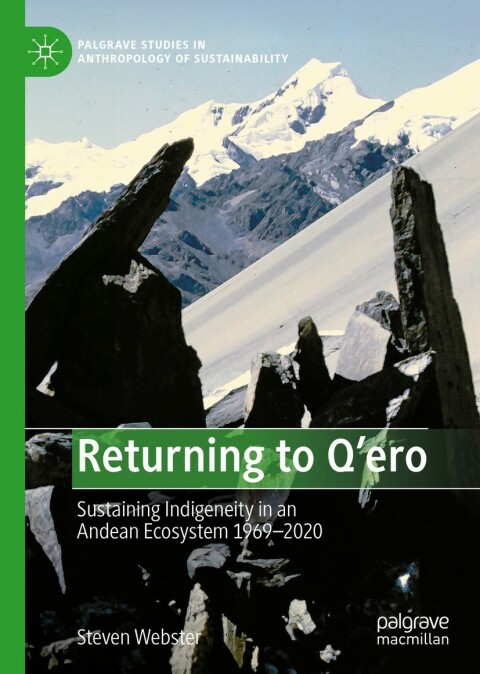
In this book, social anthropologist Steven Webster provides an ethnohistory of sustainability among the indigenous Andean community of Hatun Q’ero since the 1960s. He first revisits his detailed ecological research among the remote Q’ero in the high Andes of Southern Peru in 1969–1970 and 1977. At that time, Qero was a community comprised of several hamlets in converging valleys based primarily on alpaca herding at about 4,300 meters, and composed of about 400 persons in about 80 families. He then relies on the few ethnographies by other anthropologists to document changes in Hatun Qero by 2020 , spanning 1980-90s when the nation was immersed in agrarian reform followed by virtual civil war between Maoist guerrillas, the government, and the highland peasantry. Through all of these ideological and political-economic developments the sustainability of Qero as an integral ecological and social community as well as a famously Incaic cultural tradition becomes a global as well as national issue.  This book argues that while the commercial expansion of ceremonial and shamanist tourism can be seen as extractivist similar to industrial mining, the assertive form of independence characteristic of the Qeros appears to remain sustainable in the face of both these extractive threats. While the Qero community is internally reinforced by their reciprocal relationship with the same non-human forces these forms of extraction seek to exploit, they are externally reinforced by the global as well as national rise of indigeneity movements. Ironically, given the moral force developed in some aspects of shamanist tourism, it can even be argued that it supports environmental sustainability against climate change, globally as well as in Qero. This book analyzes the increasing importance of indigeneity in the national politics of Peru as well as the other Andean nations in the last few decades, but it remains to set this form of identity politics in its wider “intersectionalâ€? context of social class and ethnic conflict in the Andes.Â








 Este sitio web utiliza cookies para mejorar la experiencia del usuario y asegurar su funcionamiento con eficacia.
Al utilizarlo usted acepta el uso de cookies.
Este sitio web utiliza cookies para mejorar la experiencia del usuario y asegurar su funcionamiento con eficacia.
Al utilizarlo usted acepta el uso de cookies.