
Carrito de compra
Su pedido cuenta con 0 productos
Envío gratis a partir de $389.00 (Consulta T&C)
| ISBN: | 9789811575013 |
|---|---|
| Formato: | ePub |
| Idioma: | Inglés |
| Editorial: | Springer Nature |
| Tema: | Ciencias políticas |
| Subtema: | Historia y Teoría |
| Año de publicación: | 2020-09-28 |
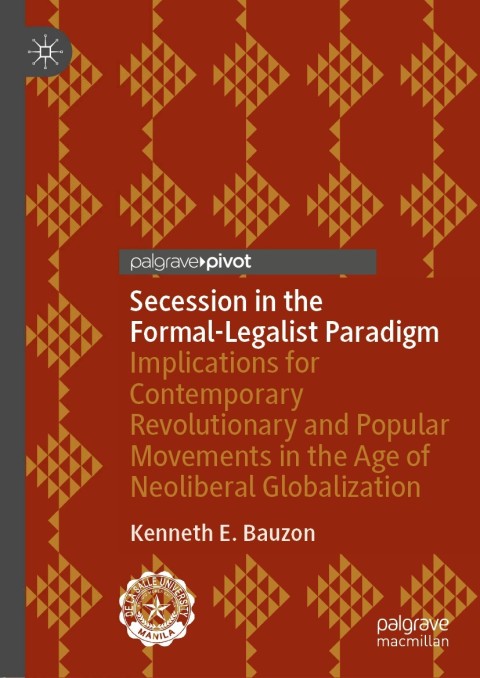
This book explores how formal-legalism, as the dominant paradigm of explanation, has sought to explain the phenomenon of secessionism among its practitioners as a problem for the modern state. This study bears how these practitioners have, over time, described, defined, and proposed to solve secessionism and related political problems within the logic of their paradigm. In the process, the book reconstructs the formalist worldview and the practitioners’ fundamental presuppositions which, to them, render comprehensible and meaningful the occurrence of events, like secession, as well as means of dealing with it. More significantly, the book exposes a debilitating flaw of formal-legalist paradigm as it fails to account for other principles of mobilization in political and social life that defy formal-legal rules such as those based on race, ethnicity, language, culture, and material factors. Narrow adherence to textual sources and the literal approach, have led formal-legalists to miss, willfully ignore, or endorse the paradigms strategic association with state power, evolving since the dawn of the Enlightenment. Formal-legalism has lent itself amenable to the interests of the state and to the variable construction of the meaning of the law devoid of original spirit and universality but conforming with the specific interests of the state or, for that matter, the prevailing American empire, both spatially and temporally. Accounting for this anomaly, the historical materialist perspective is considered, with appropriate historical and contemporary illustrations, as a relevant explanatory alternative to the now-obsolescent formal-legalist paradigm. With the assumption that, indeed, economic and material considerations such as those demanded by the dominant class elements within the state underlie the rationale for the state, formal-legalism has evolved from one that initially provided a presumed objective view of society to one that has subjectively become an essential part of the cultural suprastructure that allows these elements to command the state as a principal tool for labor- and value-extraction during what is popularly known as contemporary neoliberal globalization.Â











 Este sitio web utiliza cookies para mejorar la experiencia del usuario y asegurar su funcionamiento con eficacia.
Al utilizarlo usted acepta el uso de cookies.
Este sitio web utiliza cookies para mejorar la experiencia del usuario y asegurar su funcionamiento con eficacia.
Al utilizarlo usted acepta el uso de cookies.