
Carrito de compra
Su pedido cuenta con 0 productos
Envío gratis a partir de $389.00 (Consulta T&C)
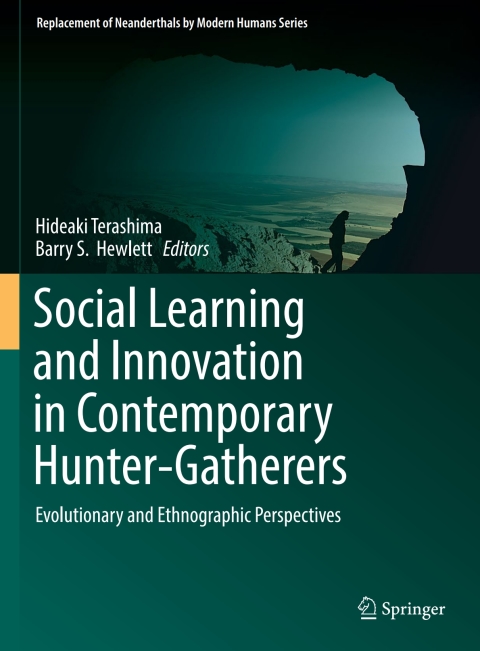
| ISBN: | 9784431559979 |
|---|---|
| Formato: | Page Fidelity |
| Idioma: | Inglés |
| Editorial: | Springer Nature |
| Tema: | Ciencias sociales |
| Subtema: | Antropología general |
| Año de publicación: | 2016-10-22 |
This is the first book to examine social learning and innovation in hunter–gatherers from around the world. More is known about social learning in chimpanzees and nonhuman primates than is known about social learning in hunter–gatherers, a way of life that characterized most of human history. The book describes diverse patterns of learning and teaching behaviors in contemporary hunter–gatherers from the perspectives of cultural anthropology, ecological anthropology, biological anthropology, and developmental psychology. The book addresses several theoretical issues including the learning hypothesis which suggests that the fate of Homo sapiens and Neanderthals in the last glacial period might have been due to the differences in learning ability. It has been unequivocally claimed that social learning is intrinsically important for human beings; however, the characteristics of human learning remain under a dense fog despite innumerable studies with children from urban–industrialcultures. Controversy continues on problems such as: do hunter–gatherers teach? If so, what types of teaching occur, who does it, how often, under what contexts, and so on. The book explores the most basic and intrinsic aspects of social learning as well as the foundation of innovative activities in everyday activities of contemporary hunter–gatherer people across the earth. The book examines how hunter-gatherer core values, such as gender and age egalitarianism and extensive sharing of food and childcare are transmitted and acquired by children. Chapters are grouped into five sections: 1) theoretical perspectives of learning in hunter–gatherers, 2) modes and processes of social learning in hunter–gatherers, 3) innovation and cumulative culture, 4) play and other cultural contexts of social learning and innovation, 5) biological contexts of learning and innovation. Ideas and concepts based on the data gathered through an intensive fieldwork by the authors will give much insight into the mechanisms and meanings of learning and education in modern humans.







 Este sitio web utiliza cookies para mejorar la experiencia del usuario y asegurar su funcionamiento con eficacia.
Al utilizarlo usted acepta el uso de cookies.
Este sitio web utiliza cookies para mejorar la experiencia del usuario y asegurar su funcionamiento con eficacia.
Al utilizarlo usted acepta el uso de cookies.