
Carrito de compra
Su pedido cuenta con 0 productos
Envío gratis a partir de $389.00 (Consulta T&C)
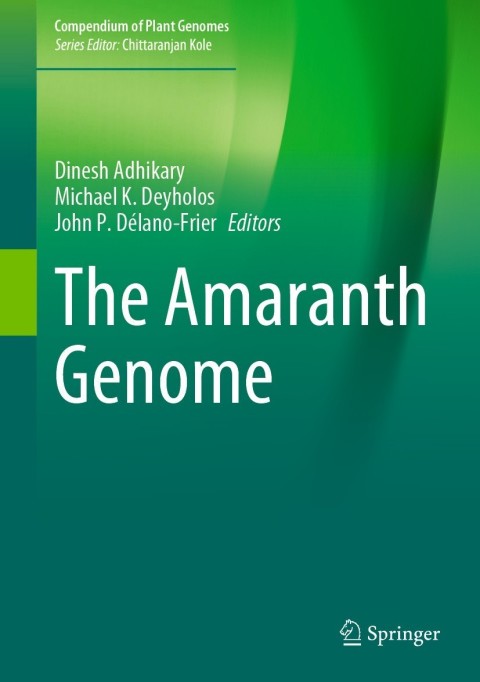
| ISBN: | 9783030723651 |
|---|---|
| Formato: | ePub |
| Idioma: | Inglés |
| Editorial: | Springer Nature |
| Tema: | Ciencia |
| Subtema: | Ciencias de la Vida botánica |
| Año de publicación: | 2021-06-01 |
This book describes the development of genetic resources in amaranths, with a major focus on genomics, reverse, and forward genetics tools and strategies that have been developed for crop improvement. Amaranth is an ancient crop native to the New World. Interest in amaranths is being renewed, due to their adaptability, stress tolerance, and nutritional value. There are about 65 species in the genus, including Amaranthus caudatus L., A. cruentus L., and A. hypochondriacus L., which are primarily grown as protein-rich grains or pseudocereals. The genus also includes major noxious weeds (e.g., A. palmeri). The amaranths are within the Caryophyllales order and thus many species (e.g., A. tricolor) produce red (betacyanin) or yellow (betaxanthin) betalain pigments, which are chemically distinct from the anthocyanins responsible for red pigmentation in other plants. A. hypochondriacus, which shows disomic inheritance (2n = 32; n= 466 Mb), has been sequenced and annotated with 23,059 protein-coding genes. Additional members of the genus are now also been sequenced including weedy amaranths, other grain amaranths, and their putative progenitors.







 Este sitio web utiliza cookies para mejorar la experiencia del usuario y asegurar su funcionamiento con eficacia.
Al utilizarlo usted acepta el uso de cookies.
Este sitio web utiliza cookies para mejorar la experiencia del usuario y asegurar su funcionamiento con eficacia.
Al utilizarlo usted acepta el uso de cookies.