

Carrito de compra
Su pedido cuenta con 0 productos
Envío gratis a partir de $389.00 (Consulta T&C)
| ISBN: | 9783319678917 |
|---|---|
| Formato: | Page Fidelity |
| Idioma: | Inglés |
| Editorial: | Springer Nature |
| Tema: | Tecnología e ingeniería |
| Subtema: | Eletrónica semicondutores |
| Año de publicación: | 2017-09-14 |
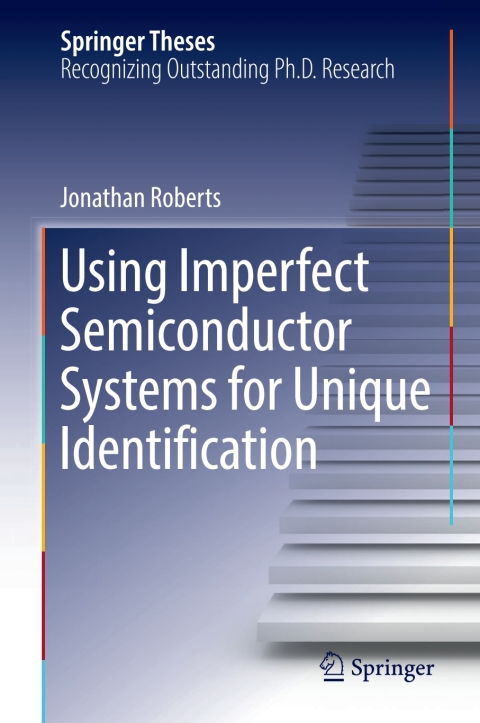
This thesis describes novel devices for the secure identification of objects or electronic systems. The identification relies on the the atomic-scale uniqueness of semiconductor devices by measuring a macroscopic quantum property of the system in question. Traditionally, objects and electronic systems have been securely identified by measuring specific characteristics: common examples include passwords, fingerprints used to identify a person or an electronic device, and holograms that can tag a given object to prove its authenticity. Unfortunately, modern technologies also make it possible to circumvent these everyday techniques. Variations in quantum properties are amplified by the existence of atomic-scale imperfections. As such, these devices are the hardest possible systems to clone. They also use the least resources and provide robust security. Hence they have tremendous potential significance as a means of reliably telling the good guys from the bad.








 Este sitio web utiliza cookies para mejorar la experiencia del usuario y asegurar su funcionamiento con eficacia.
Al utilizarlo usted acepta el uso de cookies.
Este sitio web utiliza cookies para mejorar la experiencia del usuario y asegurar su funcionamiento con eficacia.
Al utilizarlo usted acepta el uso de cookies.